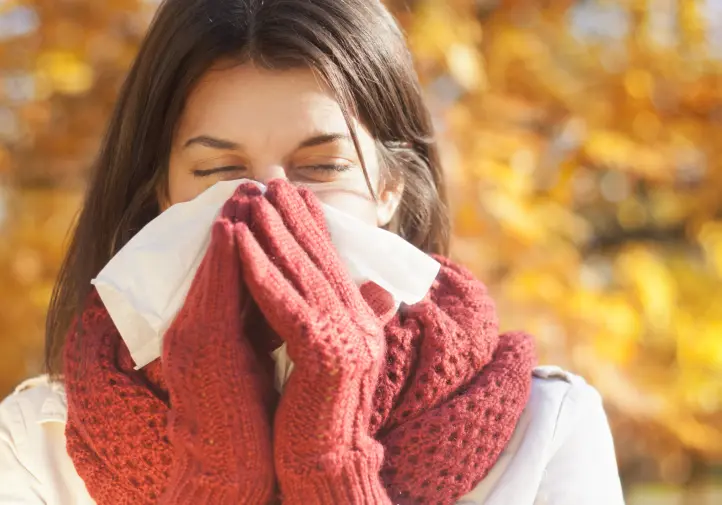
Fall allergies bring sneezing, congestion, itchy eyes, and coughing that can last for weeks. This post explains what causes fall allergy symptoms, how to find relief fast, and when to see a provider at Aspen Medical Center in Santa Fe and Española. You will learn practical treatment options and how to tell allergies apart from a cold.
What Causes Fall Allergies?
Fall allergy symptoms usually start when ragweed pollen fills the air. A single ragweed plant releases up to one billion pollen grains in a season, and that pollen travels for miles on dry, windy days. In northern New Mexico, the high desert climate and windy autumn weather push pollen across Santa Fe, Pojoaque, Pecos, and El Dorado.
Ragweed is not the only trigger. Mold spores grow on damp fallen leaves and in piles of yard debris. Dust mites stir up when you turn on your heat for the first time after summer. All of these allergens set off the same immune response, which is why fall feels like a rough season for so many families in the area.
Fall Allergy Symptoms in Adults and Children
Fall allergy symptoms look similar across all ages. You might notice:
- Sneezing and a runny or congested nose
- Postnasal drip
- Itchy nose, throat, or ears
- Watery, itchy, or red eyes
- Coughing
- Fatigue from poor sleep
Children often show the same signs, though they might rub their eyes and nose more or seem more tired than usual. Our nurse practitioners at Aspen Medical Center treat pediatric patients, so families do not have to search for a separate clinic when a child has symptoms.
How Do You Tell Allergies From a Cold?
Allergies and colds share symptoms, but a few differences help you tell them apart. Allergy symptoms last as long as you are exposed to the trigger, which can mean weeks. Colds usually clear within seven to ten days. Allergies cause itching in the eyes, nose, and throat, while colds rarely do. A cold might bring a low fever and body aches. Allergies do not cause fever.
If your symptoms come with a fever, colored mucus, or facial pain, you might have a sinus infection instead of allergies. A visit to our walk-in clinic helps you find out. We serve patients seven days a week, so you do not have to wait for a weekday appointment to get answers.
How to Get Rid of Fall Allergies Fast
The fastest way to feel better is to reduce your exposure and treat symptoms early. Here are practical steps that work.
Start medication before symptoms peak. Many allergy treatments work best when you take them ahead of heavy pollen days. Check the daily pollen count and begin treatment when levels rise.
Keep windows closed on windy days. Ragweed pollen counts run highest in the morning and on dry, breezy days. Run your air conditioning or air filter instead of opening windows.
Shower and change clothes after time outdoors. Pollen sticks to your hair, skin, and clothing. Rinsing it off before bed keeps it out of your sheets.
Rinse your nasal passages. A saline rinse flushes pollen and mucus from your nose and eases congestion without medication.
Clean up yard debris. Wet leaves grow mold. Wearing a mask while you rake and clearing piles quickly reduces mold exposure around your home.
How to Stop Allergies Immediately With Natural Methods
Natural steps ease symptoms without medication for many people. A saline nasal rinse clears allergens right away. Staying hydrated thins mucus and soothes a scratchy throat. A cool compress calms itchy, swollen eyes. An air purifier with a HEPA filter cuts indoor pollen and dust. These methods help with mild symptoms, but they do not replace medical care when symptoms are severe or do not improve.
What Allergy Treatments Are Available?
Several treatment options relieve fall allergy symptoms. The right choice depends on how severe your symptoms are and how long they last.
Antihistamines block the histamine your body releases during an allergic reaction. They ease sneezing, itching, and a runny nose. Oral antihistamines come in short-acting and long-acting forms, and both relieve common symptoms.
Nasal steroid sprays reduce inflammation in your nasal passages. They work well for congestion and postnasal drip. These sprays take a few days to reach full effect, so daily use during allergy season gives the best results.
Cromolyn sodium nasal spray prevents symptoms before they start. It works best when you take it ahead of exposure. It can also ease symptoms once they begin.
Decongestants shrink swollen nasal tissue and relieve stuffiness. They offer short-term relief, and you should use them only as directed.
Eye drops relieve itchy, watery, red eyes. Antihistamine eye drops target allergy symptoms directly.
If over the counter options do not control your symptoms, a provider at Aspen Medical Center reviews your history and recommends a treatment plan built for you. We place you at the center of your care and give you the knowledge to make informed choices about your health.
Is Claritin or Zyrtec Better for Fall Allergies?
Both are second-generation antihistamines that relieve fall allergy symptoms, and both last about 24 hours. Some people respond better to one than the other, and the only way to know is to try them. Zyrtec sometimes causes mild drowsiness, while Claritin tends to be non-drowsy for most people. Ask your provider which fits your symptoms and daily routine.
Can You Cure Pollen Allergies Permanently?
There is no guaranteed permanent cure for pollen allergies, but treatment controls symptoms and improves your quality of life. Some patients pursue allergy immunotherapy, which gradually reduces sensitivity over time under medical supervision. For most people, a combination of avoiding triggers and using the right medication keeps symptoms manageable each season. A provider helps you build a plan that fits your needs.
When Should You See a Provider for Fall Allergies?
See a provider when symptoms interfere with sleep, work, or daily activities, or when over the counter treatments stop working. You should also seek care if you develop a fever, facial pain, or thick colored mucus, which can signal a sinus infection. Anyone with wheezing or trouble breathing needs care right away.
Aspen Medical Center is the only facility in the Santa Fe area offering both urgent care and primary care under one roof. That means we treat your allergy flare today and manage your long-term health at the same clinic. We accept walk-ins and offer online check-in through Solv, plus text notifications for your appointment. Our Santa Fe location sits at 3450 Zafarano Drive, Suite C, and we serve patients across Santa Fe, Pojoaque, Las Vegas NM, Pecos, and El Dorado, along with our Española location.
Frequently Asked Questions
What are the most common fall allergies?
Ragweed pollen is the most common fall allergy trigger. Mold spores from damp leaves and dust mites that stir up when heating systems turn on also cause symptoms during autumn.
How long do fall allergies last?
Fall allergy symptoms last as long as you are exposed to the trigger, often from late summer through the first frost. In our area, that can mean several weeks of symptoms.
Do I need an appointment for allergy treatment?
No. Aspen Medical Center accepts walk-ins at our Santa Fe and Española locations, and you can also use online check-in to save time before you arrive.
Can nurse practitioners treat my child’s allergies?
Yes. Our nurse practitioners treat pediatric patients, so children with fall allergy symptoms get compassionate care at the same clinic you visit.
Get Relief at Aspen Medical Center
Do not let fall allergies slow you down. Aspen Medical Center delivers compassionate urgent care and primary care to patients of every age across Santa Fe and Española. We are open Monday through Friday from 8AM to 9PM and Saturday and Sunday from 9AM to 9PM, with walk-ins, online check-in, and all major insurances accepted. Call us at 505-466-5885 to book your appointment and breathe easier this season.
Related Content
-
Fall Allergy Symptoms and Treatment Options in Santa Fe
Fall allergies bring sneezing, congestion, itchy eyes, and coughing that can last for weeks. This post explains what causes fall allergy symptoms, how to find relief fast, and when to see a provider at Aspen Medical Center in Santa Fe and…
-

Common Back-to-School Illnesses and Acute Care Santa Fe NM
Back-to-school season brings crowded classrooms, shared supplies, and a steady spread of germs. This post explains the most common illnesses children catch when school starts, how to recognize the warning signs, and when to seek acute care in Santa Fe, NM.…
-
Telling the Difference Between A Sprain or Fracture
You twist your ankle on a trail near El Dorado or land wrong during a weekend soccer game in Santa Fe. The pain sets in, the swelling starts, and one question runs through your mind: is it a sprain or a…
-

UTI Treatment & Prevention Tips For Santa Fe Resident
UTIs are one of the most common infections treated in urgent care settings, and they are also one of the most misunderstood. This article covers what causes UTIs, how to get relief fast, proven prevention strategies, and when to see a…
-

How Often Should I Get An STD Or STI Test?
Sexual health plays a major role in your overall well being. Many sexually transmitted diseases and infections do not show symptoms right away. Some people never notice symptoms at all. Regular testing helps you protect your health and the health of…
-

Urgent Care Awareness Month: What It Means For You
What Is Urgent Care Awareness Month? Urgent Care Awareness Month is a yearly event led by the Urgent Care Association. It runs through the month of May. Aspen Medical Center is a proud member of the Urgent Care Association, joining clinics…
-

How Often Should I See My Primary Care Doctor?
If you’ve ever wondered how often should I see my primary care doctor?, you’re not alone. Many people only visit a doctor when something feels wrong, but preventive care plays a major role in maintaining long term health. The truth is, the ideal schedule depends on your age, medical history,…
-
Why STI Testing Matters And How Often You Should Get Tested
Sexually transmitted infections, often referred to as STIs, are more common than many people realize. Millions of new cases are reported each year, and many individuals may not even know they are infected. This is because a large number of STIs do not cause noticeable symptoms right away, or at…
-

Urgent Care Center In Santa Fe, NM
When you or a loved one gets sick or injured unexpectedly it can be hard to know where to go for care. Many people wonder if they should head to the emergency room or wait for a primary care appointment. An urgent care center in Santa Fe, NM offers a…
-
Walk-In Clinic Santa Fe, NM: Same-Day Medical Help
When unexpected illness or injury strikes, waiting days or even weeks for an appointment is not an option. In Santa Fe, patients have a trusted solution that delivers care without delay. A walk in clinic offers same day medical attention for a wide range of health concerns. At Aspen Medical…